Music Therapy
What is Music Therapy?
Music therapy is a clinical, evidence-based practice. The use of music interventions help people meet physical, emotional, cognitive, motor and social goals, addressing needs from low mood and stress relief to communication and rehabilitation, often for those with disabilities, illnesses or mental health challenges.
What We Offer
Music Therapy
-
Trial sessions are available upon request. We encourage new referrals or enquiries to have a trial session with one of our therapists before committing to a block or long term therapy. It is essential that the client feels comfortable and settled with the therapist due to the nature of the work.
The trial session is charged at our usual session rate. But there is no obligation to continue past this initial session if you feel the therapy is not the right fit and wish to explore other options.
Should you wish to continue with us once the trial session is complete, we then ask you to commit to either an agreed upon amount of sessions (A block of 12 is our minimum) or should you require long term work, an agreement of providing a months notice for ending is required.
This is all outlined in the terms of service contract we will ask you to read and sign. Please do not hesitate to ask any questions or for further clarification if anything feels unclear.
Once the sessions are agreed upon and the client (and client advocate where appropriate) are happy to commence, an assessment period will take place.
Individual music therapy will begin with an assessment period of 3 sessions over 3 weeks (1 session a week). These sessions will typically last between 45-60 minutes.
When you enquire or request an assessment period, we will ask you to complete a form with relevant information the therapist might need to know. This will be along the lines of any diagnoses, aims, referral reasons and general background information. If you would like to trial a session before committing to a full assessment period, this is something we can offer.
All data is held within GDPR regulations. Consent and contract forms will be sent to you to sign as well as mentioned above.
After the assessment period has ended, we will form a report and discuss the findings and recommendations with you and set out a plan moving forward.
-
Individual Sessions
During the session the client and therapist take part by playing, singing and listening. The client is has access to a range of instruments and is encouraged to explore them at their own pace.
No previous experience of music is necessary. Meaning there is no need to know how to play any instrument. It is not a music lesson in which a client will be instructed on how to play.
The music played is often improvised and covers a range of styles and genres according to the client’s individual preferences and needs. Familiar music/pre-composed music is also utilised in sessions, as well as music activities, games, music technology, song-writing and more.
The therapist works with a person-centred approach, encouraging the client to explore in their own way. The focus is on nurturing and supporting their autonomy, self-expression and exploration.
As the process develops, a trusting relationship develops between the client and therapist, which enables emotional and psychological themes to surface and to be worked with. This might include verbal reflection on arising themes brought up by the shared music making.
Group Sessions
Group sessions are usually no larger than 10 members (anything over 4 members will require an assistant therapist or advocate/parent/carer support).
Groups are largely ability based rather than age based, though there is often an advised age group e.g. ages 6-10. But this is not strictly kept as we recognise that ability is not always age related.
Sessions are structured and always contain a way of marking the beginning and end of the session. This can be in the form of a hello and goodbye song, or it could be a specific group action or word. This is usually decided as a group in the first session if applicable.
The bulk of the session is lead by the therapist with guided activities that work towards the focus of the group e.g. social interaction and communication, or cognitive skills, or motor function etc.
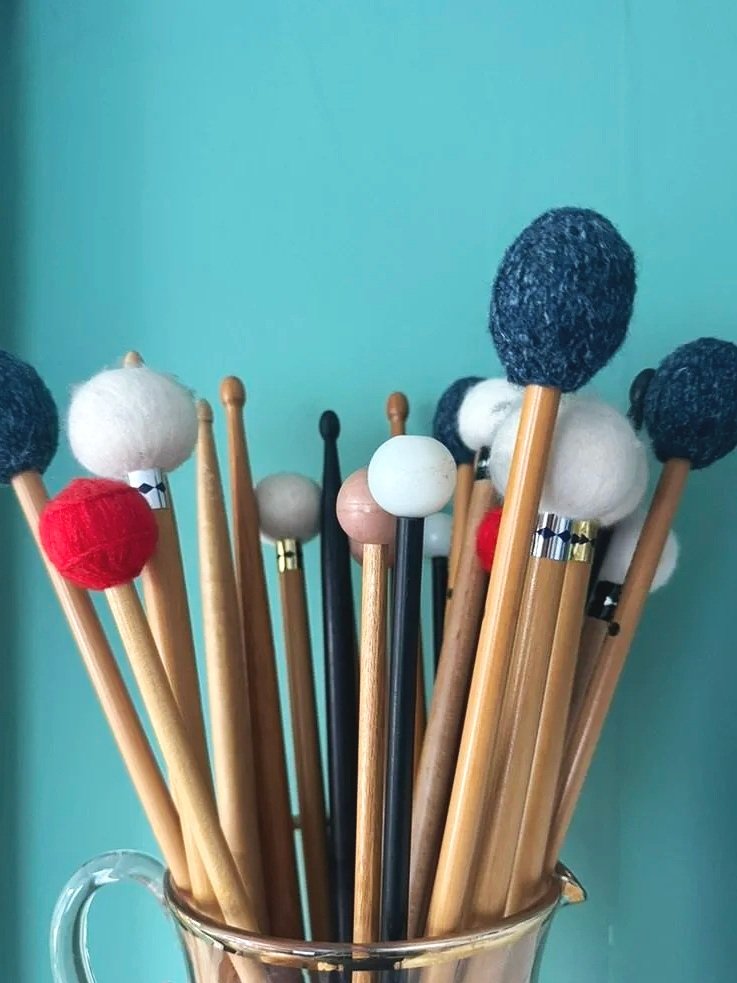
This is achieved through different opportunities for choosing, instruments, other props or equipment/materials. This might look like percussion and tuned instruments, use of scarves and ribbons, audio buttons, pre-recorded music, bubbles, dancing, puppets and more.
Like individual music therapy, group music therapy is not a music lesson. There is no need to have any previous music or playing experience. There is also no obligation to take part in every element of the session, the group members have autonomy over their decisions and are not forced to ‘play properly’ at any point. It is for them to decide how to engage with the activities and how to explore musically.
-
About
Music therapy work can be short or long-term depending on the need and aims of the therapeutic intervention.
It is generally not advised to undergo two creative therapy interventions at the same time, so keep this in mind when enquiring.
Session Length
Sessions will usually be of a set length (45-60 minutes) and a set amount of weeks, should this be applicable. Goals will be discussed and set before the main block of sessions begins.
Location
Music therapy can take place in the client’s home, though we do ask for a quiet relaxing space where there will be no interruptions during the session time. Or the sessions may take place in a local community space. The room hiring fees for which will be added to the monthly invoice.
Should the therapy work be undertaken by Rachael, there is also the option to attend sessions on site in her therapy studio.Reports and Feedback
Reports for both individual and group sessions will be provided after the initial 3 sessions, at the middle point and again at the end of the intervention.
For ongoing long term music therapy work, reports will be completed on a 6 monthly basis and can be requested at any point other between these for an extra fee.
Should any client advocate want feedback between the times of receiving reports, they can book a 30 minute meeting at the fee rate of half a session. The advocate is also welcome to email the therapist with any shorter enquiries.
Individual Sessions
Individual sessions are lead by the client, their needs and wants. The therapist will be guided by what the client wants to explore. They might make suggestions from time to time, but their role is to facilitate the work not control it.
If a client would benefit from a more structured approach this can be discussed and decided on together in the initial sessions.
Group Sessions
Group sessions are structured and guided by the therapist. They usually consist of a few activities that are set to work towards the group goals. They are also tailored to the group members interests and abilities. Group members are encouraged to make suggestions and maintain the right to choose whether to engage and participate in each activity.
-
The fee for individual music therapy is £70 per hour. Sessions can vary in length between 30 minutes and an hour.
The fee for group music therapy is £110 an hour for up to 8 group members. The fee for groups of 9 or more is £150 an hour.
The fee covers the session time with the client each week, the preparation for each session, musical instruments for use in the sessions (and their upkeep), music software and equipment we might need, and travel costs.
We ask for added travel expenses if the therapist is traveling further than 20 miles.
We recommend weekly sessions, but also consider fortnightly work as well.
There are three spaces at any one time for 'sliding scale' clients. These are only held for individual therapy work with Rachael. Sliding scale is applicable to those who require therapy but are in financial hardship or cannot sustain payments of the full fee (detailed below) on a long term basis. These spaces can be enquired about. We do not ask for any proof of income, they are allocated based on the expectation that any potential client enquiring is honest about their situation.
Please do get in contact to find out more.
Neurologic Music Therapy
-
Description text goes here
-
Description text goes here
-
Description text goes here
-
Item description
In-person and remote options
Our therapists travel to you for your convenience and comfort, but we can also offer sessions in a variety of community centre locations, or online.
Meet Our Music Therapists
-
![]()
Queenie Wong
-
![]()
Caitlin Shek
-
![]()
Jan Ong
-
![]()
Jessica Donoghue
-
![]()
Philip Johnson